
Sunita B.K.
Sunita B.K. is 30 years old and lives with her son and a daughter in Chitepani, Madhya Nepal Municipality in the Lamjung district. Her husband has been working in Saudi Arabia for the last three years. Like any mother, her biggest dream is to give her children a better life and a good education. But life has not been easy for Sunita.
July 2026
My name is Sunita. Participating in the Women at Work, Children in School program implemented by SLISHA has brought remarkable positive changes to my life over the past few months. The knowledge, skills, and encouragement I received through this program have transformed not only my personal life but also my family relationships and my livelihood.
A New Beginning
Before joining the program, I had never imagined how much I could change. Through the training, monthly discussion meetings, and regular home visits, I learned many practical lessons that I now use in my daily life.
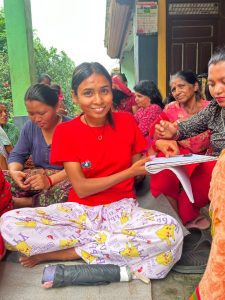
Today, I am much more confident than before. I have learned how to manage my time wisely, maintain personal hygiene, and apply important health and nutrition practices for myself and my family. I have also developed the confidence to express my ideas clearly, make small decisions on my own, save money regularly, and look for new income-generating opportunities. These changes have made me more independent and hopeful about my future.
Positive Changes at Home
The program has also strengthened my family life. There is now better communication, understanding, and respect among all family members. My husband and I openly discuss important matters before making decisions, and we share household responsibilities. His encouragement has motivated me to work harder in my business.
My children have also become more responsible by helping with household tasks whenever they can. Because I now pay greater attention to their education, health, nutrition, and hygiene, our relationship has become much stronger. We also spend money more carefully and save regularly, creating a happier and more peaceful home.
Starting My Own Business
After receiving business training, skills, and confidence, I used the organization’s NPR 25,000 seed money to start a poultry farming business.
The beginning was very encouraging. My first batch of chickens performed well, and the business generated a good income. For the first time, I was earning through my own hard work, which greatly increased my confidence. I even dreamed of expanding the business in the future.
Learning Through Challenges
However, business does not always go as planned.
While my first batch was successful, many chickens in the second batch fell ill with various diseases. Sadly, many of them died, causing me a significant financial loss. It was one of the most difficult times in my life. For a while, I even thought about giving up the business completely.
But then I remembered one of the most valuable lessons from the training:
“Work. Think. Change. When problems come, do not give up—find solutions and keep moving forward.”
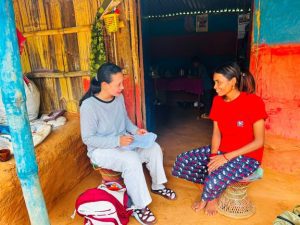
Those words gave me the strength to continue.
Instead of quitting, I decided to reduce my risk by changing my strategy. I continue poultry farming on a smaller scale while also starting pig farming. Today, I manage both businesses together. This has helped me increase my income while reducing the risks of depending on only one business.
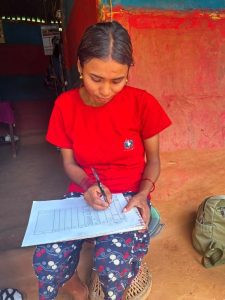
Knowledge That Changed My Life
The monthly discussion meetings covered many important topics such as hygiene, nutrition, child rights, women’s rights, and safe motherhood. These sessions helped me improve many daily habits.
Now I keep my home, kitchen, and surroundings clean. I store drinking water safely, cover food properly, and pay special attention to my children’s and my own personal hygiene.
I have also learned the importance of eating balanced and nutritious food. My family now gives priority to vegetables, eggs, and other healthy foods produced at home.
The discussions on women’s rights changed my thinking. I realized that women have the right to express their opinions, participate in family decisions, and understand their rights. At the same time, I learned that parents have the responsibility to protect their children, ensure their education, listen to their opinions, and raise them with love and care.
The safe motherhood sessions taught me the importance of regular health check-ups during pregnancy, proper nutrition, and giving birth safely at a health facility. Today, I not only practice these lessons myself but also share them with other women in my community.
Looking Ahead with Confidence
The support I received from SLISHA—including the training, seed grant, regular home visits, and discussion meetings—has changed much more than my income. It has transformed my confidence, my behavior, my family relationships, and my outlook on life.
My journey has taught me that business success is not only about making profits. Challenges will always come. But with patience, determination, and the right decisions, every challenge can become an opportunity to grow.
Today, I continue to work hard, learn every day, and move forward with confidence. My dream is to become a successful businesswoman who can support her family and inspire other women in my community.
Thank you.
Sunita B.K. is a 30-year-old woman originally from Rupa Rural Municipality Ward No. 2, Srikotan, Kaski district, in western Nepal. For the past eight years, she has been living in her maternal village, Chitepani, Ward No. 5 of Madhya Nepal Municipality in Lamjung district. She is a mother of two children – a son and a daughter – who are 10 and 8 years old, studying in grade 4 and grade 2. Like any mother, her biggest dream is to give her children a better life and a good education.
However, life has not been easy. With no stable source of income, Sunita struggled to manage daily expenses. Hoping to improve their future, she took a loan and sent her husband to Saudi Arabia for work. It has been three years since he left, but his earnings are still not enough. The burden of loan repayment, household expenses, and her children’s education continues to weigh heavily on her. Despite feeling helpless at times, she never gave up, because as a mother, she knew she had to keep going.
One day in the month of Mangsir (November), while returning home from Bhorletar, Sunita noticed two unfamiliar people talking with some women in Chitepani. Curious, she approached them, initially thinking they were from a cooperative. But when she learned they were from an organization working to support women, her interest grew.

As she listened, she realized that the organization was helping women like her; those who wanted to do something in life but never had the opportunity. The idea of becoming self-reliant sparked a sense of hope within her, something she had not felt in a long time.
They announced another meeting the next day at 11 a.m. Sunita eagerly informed her friends, and six of them arrived early for the meeting. There, their trainer, Gauri ji, explained the purpose of the program. One statement deeply touched Sunita’s heart: “Until women become self-reliant, even to ask for five rupees they must depend on others. That is why the family’s financial condition remains weak.”
Sunita felt as if those words described her own life. At a time when her husband’s income was not enough and she constantly worried about expenses and her children’s future, the arrival of Slisha and its WAWCAS program in her village felt like a blessing. For the first time in a long while, she felt genuine hope.
In the following sessions, she learned that the program focused on social transformation and economic empowerment for poor and disadvantaged women, along with business development and capacity building. It felt like a door of opportunity had finally opened in her life.
During activities like wealth ranking and social mapping, Sunita began to understand her economic reality more clearly. She had never before thought about terms like “ultra-poor” or “poor,” but now she could see her situation more honestly. As her name was placed in the ranking, many thoughts ran through her mind. She silently prayed for a chance to be part of the program.
After one meeting, Gauri ji visited Sunita’s home. Sunita felt shy and nervous, as she lived in a small house made of bamboo walls and a tin roof given by her parents. But Gauri ji’s kindness made her feel comfortable. She explained that the program was meant especially for women who truly needed support. Their open conversation made Sunita feel seen and understood.
That day, Sunita began to dream again – dreams of starting her own business, standing on her own feet, and supporting her children. For the first time, she could clearly imagine a different future.
Soon after, she joined the 7-day WAWCAS training. On the first day, she woke up early, completed her household chores, sent her children to school, and walked to the training hall with excitement and nervousness. It was her first time attending any training, and everything felt new.
The training began with a creative introduction activity called “paired pictures.” Instead of simply introducing themselves, participants found partners with matching pictures and shared personal details like likes, dislikes, fears, and memorable experiences. Through this, Sunita made a new friend and experienced a deeper human connection.
The group then set rules to make the training effective and shared responsibilities. Sunita was assigned to evaluate the third day’s activities, which gave her a sense of responsibility and confidence.
Throughout the seven days, she participated in various games and learning sessions that were both practical and meaningful. One of her favorite activities was the “Big Fish and Small Fish” game, which taught her the importance of strategy, awareness, and smart thinking.
Another powerful realization came from activities like the “color-touching game,” where she learned that the strengths needed to succeed already exist within us. Instead of comparing herself with others, she understood the importance of recognizing and using her own abilities.
The training also taught her that although changing lifelong habits is difficult, it is possible with determination. This message gave her courage to believe in her own transformation.
One of the most valuable lessons for Sunita was business planning. While filling out her business plan, she could clearly visualize her future enterprise. She learned about investment, profit, and loss, which made her feel prepared to take the next step.
Another life-changing concept was the Pocket Chart Analysis (PCA) exercise, which helped her understand how to manage and reduce unnecessary expenses. Before this, she never kept records of the money her husband sent. When he asked about expenses, she had no answers. But now, she understands the importance of maintaining financial records, not only for better management but also for strengthening trust within the family.
Sunita feels deeply grateful to the WAWCAS team for providing her with this opportunity. With the support of 25,000 rupees from the program, she is committed to starting her own business based on her plan.
This journey has transformed her life. From being shy and afraid to speak in front of others, she has become confident enough to express her thoughts openly. Today, she not only continues to learn but also shares her knowledge with others.
And now, when she looks at her children, she no longer sees only responsibility – she sees possibility. She sees a future where her son and daughter will not have to struggle the way she did.
She sees a home where there is not just survival, but dignity.
There are still challenges ahead, and the road is not easy. But Sunita is no longer the woman who once felt helpless and dependent. She is a woman with courage, skills, and a clear vision. She has begun to stand on her own feet – and with every step she takes, she is not only changing her own life but also shaping a brighter future for her children.
Her journey is no longer defined by hardship alone. It is now a story of strength, hope, and transformation – a story that reminds us that when a woman rises, an entire family rises with her.