
Child Group Story
In February 2026, I (Sonika Gurung, Local Program Leader) visited a Child Group of 23 children formed by two WAWCAS Women’s Groups in Bhanu Municipality, Beltar of Tanahun district. I greeted them warmly, asking, “How are you, dear children?” and received cheerful replies, “We are fine!” They are still quite young, and I gently explained that a child group is a small group of children aged 8 to 14 years, where they come together to learn, share, and grow.
July 2026
Greetings!
My name is Sonika Gurung, For the past five months, I have been working with the children’s group in Beltar, Bhanu Municipality–2.
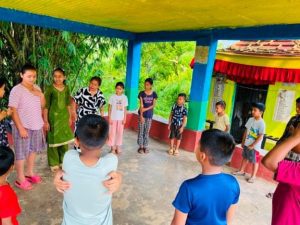
Today, I would like to share the changes I have observed during this period. Although it has only been five months, I have completed information-sharing meetings, a situation analysis meeting, and facilitated discussions on five learning topics: Nutrition, Responsible Citizenship, Vision Building, Hygiene, and Siblings’ Relationship.
After these sessions, I have witnessed many positive changes in the children.
The most noticeable improvement has been in personal hygiene. Children who previously came to the sessions without combing their hair or wearing dirty clothes now arrive neat and tidy. They regularly trim their nails, comb their hair, brush their teeth, and wash their hands with soap and water. Their personal cleanliness has improved significantly.
I have also seen positive changes in their nutrition practices. During a home visit, I noticed a child eating organic maize grown at home. When I spoke with the child’s mother, she shared that compared to before, the child now prefers homemade food and understands that eating too much outside food can harm health. The child even discusses healthy eating habits with family members.
After facilitating the session on Child Rights and Responsibilities, the children began to understand that even though they are young, they also have responsibilities. Parents have reported that their children now help with household chores, wash their own dishes and school uniforms, listen to their parents, follow school rules, and show greater respect toward others. These positive behaviours have become more visible both at home and at school.
One memorable experience came from the siblings’ relationship. During one session, I saw an older brother pulling his younger sister’s hair. I gently explained that he should love and care for his sister because if family members do not care for one another, others may not either. I also told him that hurting his sister was not the right thing to do. Two weeks later, during a home visit, his younger sister happily told me, “Miss, since that day my brother has stopped hitting and teasing me.” Since many children in this group have brothers and sisters, I have observed increased love, care, and stronger relationships among siblings after this session.
Although the children are still young, seeing such positive changes within a short period has been very encouraging. Parents often tell me, “Sonika, please continue teaching more useful topics like these.”
I have built close and trusting relationships with the children by creating a warm, family-like learning environment. At present, the children are taking their first-term examinations, so one planned session has been postponed.
Challenges Experienced During the Past Five Months
- Difficulty ensuring all children attend sessions on time.
- Irregular participation by some children.
- Managing noise and maintaining attention during sessions.
- At the beginning, many children were shy, afraid, and hesitant to interact with me.
Solutions Implemented
- Conducting regular follow-up with children and parents.
- Using more practical, interactive, and creative learning activities.
- Arranging and using more educational learning materials.
These are the major changes, challenges, and solutions I have experienced during my work with the children’s group. Although the journey has been short, I am happy to see meaningful improvements in the children’s behaviour and learning. I believe even greater positive changes will continue in the future.
Thank you.
Sonika Gurung
Local Program Leader
Tanahun
In Bhanu Municipality–2, Bhakunthok Besi, Beltar of Tanahun district, two WAWCAS Women’s Groups (TA-WI-64 and TA-WI-70) together formed one child group. This group consists of 23 children.
On February 21, 2026, I visited Beltar for the first information-sharing meeting. When I arrived, some children were already there, waiting with curiosity. However, since the message had not reached everyone, only 15 children were present that day. After a brief introduction, I returned with the hope of meeting all of them soon.
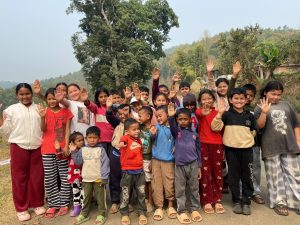
On my second visit, on February 28, 2026, I went back to the same place. This time, all 23 children were present. As I reached the venue, I was deeply touched to see their bright faces filled with excitement and curiosity. They gathered close to me, eager to listen and share. I greeted them warmly, asking, “How are you, dear children?” and received cheerful replies, “We are fine!”
I reintroduced myself and invited each child to introduce themselves. At first, they seemed a bit shy, but gradually, one by one, they shared their names, ages, grades, and schools. This simple activity slowly built their confidence.
After the introductions, I asked, “Do you know why we have gathered here?”
The children replied, “For the child group, miss.”
I then asked, “What is a child group?” They looked at each other, unsure. So, I gently explained that a child group is a small group of children aged 8 to 14 years, where they come together to learn, share, and grow.
When I asked if they knew the name of our organization, they confidently said “Slisha.” However, they were not familiar with the term “WAWCAS.” I explained that WAWCAS stands for Women at Work, Children at School, and from that day onward, they are proud members of the WAWCAS child group.
I also shared the purpose of forming such a group; to build children’s confidence, develop leadership skills, and guide them toward becoming responsible citizens of the country.
To make the session lively, we played a simple game where children passed a pen using their mouths. Through this fun activity, they learned the importance of teamwork and cooperation.
After this meaningful interaction, we concluded the session and returned home, planning to meet again. I have started to make home visits and discussed with their parents and with them again.
On March 7, 2026, we gathered once more at the same place. This session was different from the previous ones. The focus was on helping children identify the problems they face in their daily lives. Since many of the children were quite young, it was not easy for them to clearly express their thoughts. However, with patience and encouragement, we tried our best to guide them.
The topic of the day was Situation Analysis. I explained to them what a situation analysis is and requested them to share their problems honestly so that we can work together to change the situation. The children seemed worried and asked what problems they should identify. I discussed with them the importance of focusing on the issues they face at home, at school, and in the community.
We then divided the group, and they engaged in serious discussions. After their discussions, I asked them to categorize the problems into three groups: those that need to be solved now, those that should be addressed soon, and those that can wait. The following are the findings:
- Problems at Home
- Frequent conflicts due to smoking and alcohol consumption (10 children) – to be solved soon
- Unclean kitchen and toilet (12 children) – to be solved immediately
- Responsibility of taking care of younger siblings (3 children) – soon
- Having to work during study time (5 children) – soon
- Problems at School
- Teachers comparing students with each other (5 children) – soon
- Favoritism towards talented students (2 children) – soon
- Use of inappropriate language among friends (4 children) – now
- Social Problems
- Fear due to widespread use of smoking and alcohol in society (all children) – soon
- Negative peer influence (5 children) – soon
- Untouchability/discrimination (7 children) – soon
- Fear of older youths in the community (all children) – soon
- Young children engaging in smoking (4 children) – soon
With this, the session concluded. We agreed to meet twice a month to continue discussing and addressing these issues together. This small group is not just a gathering – it is slowly becoming a safe space where children can express themselves, learn, and grow with confidence.
Thank you.
Sonika Gurung
Local Program Leader, Tanahun