
Anju Kumari
My name is Anju Kumari Chaudhary, I am 23 years old and live in Gujara Municipality in the Rautahat District. I married at the age of 16 and now my family consist of my husband, my mother-in-law, my young daughter, and myself. I recently joined the WAWCAS Program and have been through the first set of trainings. It has given me knowledge, confidence, and hope. And this is just the beginning.
July 2026
From Self-Doubt to Self-Belief: Anju Chaudhary’s Journey to a Better Future
“Earlier, I only worked hard. Today, I work with confidence, a plan, and hope for the future.” — Anju Chaudhary
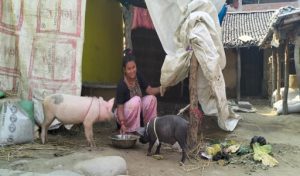
Anju Chaudhary never imagined that a WAWCAS training could change the direction of her life. Like many rural women, she spent most of her days balancing household responsibilities while trying to improve her family’s livelihood. Although she dreamed of running a successful business, she lacked confidence, planning skills, and opportunities to recognize her own potential.
Everything began to change after she joined the SLISHA’s WAWCAS program.
The interactive discussions, meetings, seven-day training, followed by regular group meetings and home visits, became more than a learning opportunity—it became the beginning of a personal transformation. Through the sessions, Anju discovered strengths she had never recognized in herself. She realized that lasting change starts with changing the way a person thinks.
“I learned that before changing my business, I first had to change myself,” she says.
One of the first changes was in the way she made decisions. In the past, she often made quick decisions without much planning. Today, she carefully analyzes situations, discusses important matters with her husband and family members, and makes thoughtful decisions. This simple habit has reduced misunderstandings at home and created a more supportive family environment where everyone feels respected and involved.
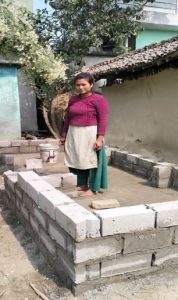
Inspired by the training, Anju set clear goals for herself at the beginning of the quarter. She planned to organize her business, save regularly, maintain records of income and expenses, and apply every lesson from the training in her daily life. Although financial constraints prevented her from completing every goal, she successfully achieved most of them and remains committed to accomplishing the rest.
Starting and expanding her pig farming enterprise was far from easy.
Finding improved breed piglets required visiting several places. Constructing a pig shed became another challenge because skilled workers were unavailable at times, and construction materials were difficult to obtain. Managing these obstacles while continuing household responsibilities often felt exhausting.
“There were moments when I wanted to give up,” Anju recalls. “But the encouragement from the trainers, support from my group members, and trust from my family reminded me that every problem has a solution.”
Instead of becoming discouraged, she learned to approach problems calmly and look for practical solutions. This change in mindset became one of the most valuable lessons she gained through the program.
The business management sessions significantly strengthened her entrepreneurial skills. She learned how to prepare a business plan, calculate costs and profits, maintain financial records, provide respectful customer service, and make informed business decisions. Today, she records every income and expense, allowing her to understand where money is being spent, identify opportunities for savings, and improve the profitability of her enterprise.
“I now know exactly how my business is performing. Keeping records helps me make better decisions and gives me confidence to plan for growth.”
The program also introduced Anju to important lessons on hygiene, sanitation, and nutrition that transformed her family’s daily practices. Although her family always valued cleanliness, she realized they had never fully understood proper hygiene practices. She now pays attention to personal hygiene, household sanitation, environmental cleanliness, and hygiene within her business.
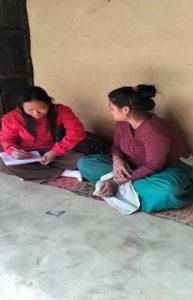
Nutrition sessions also changed her perspective. She learned that healthy eating is not simply about eating enough food but about combining energy-giving, body-building, and protective foods in balanced proportions. This knowledge has improved the quality of meals she prepares for her family and strengthened her understanding of preventive health.
Perhaps the most meaningful transformation has taken place within her family.
Before participating in the program, Anju sometimes reacted quickly to her children’s behavior without listening carefully to their feelings. Today, she intentionally spends quality time with them, listens patiently, supports their studies, appreciates their achievements, and guides them through love instead of fear.
The results have been remarkable.
Her children have become more responsible, disciplined, and confident. They complete their homework on time, willingly help with household chores, and express their opinions more openly. Their growing confidence has become a source of pride for the entire family.
“My children are happier now because I have learned to listen before I speak. I understand that love and respectful communication build confidence in children.”
Her relationship with her husband has also changed significantly. Previously, family decisions were often made without discussion, leading to occasional disagreements. Today, they openly communicate, make joint decisions, and support each other in both household responsibilities and business activities. Even her relationship with her mother-in-law has become warmer, built on greater understanding, mutual respect, and cooperation.
Beyond her household, Anju has emerged as a respected member of her community.
She actively shares her knowledge about savings, business planning, child care, hygiene, nutrition, and family cooperation with neighbors and other women. Community members now seek her advice, and she confidently participates in group discussions and community meetings—something she once found intimidating.
“The biggest change is that I now believe my voice matters.”
Reflecting on the past three months, Anju believes that the greatest achievement has not been financial gain alone but the confidence to transform knowledge into action. She has learned that sustainable progress comes through consistent effort, careful planning, and the courage to keep moving forward despite challenges.
Looking ahead, she plans to continue expanding her business, strengthen her savings, improve financial management, and provide even better care for her children. She also hopes to inspire more women in her community to become financially independent and confident decision-makers.
Anju’s story demonstrates that empowering one woman creates a ripple effect far beyond a single household. Her transformation has strengthened her family, improved her livelihood, influenced her community, and created a brighter future for her children.
For Anju, the most significant change is not simply having a better business—it is becoming a woman who believes in her own potential.
“I have learned that change does not happen overnight. It grows through small, consistent steps. Today, I face the future with confidence because I know I have the ability to shape it.”
My name is Anju Kumari Chaudhary. I am 23 years old, and I live in Pokharbhinda Tole, Ward No. 4 of Gujara Municipality in Rautahat District. This village is not just where I live—it is where I was born and raised, making it deeply meaningful to me.
I was born into an educated, middle-class Chaudhary family where my basic needs-food, clothing, and education-were always fulfilled. My childhood was secure and comfortable. However, at the age of just 16, I made a life-changing decision that altered the course of my life. I eloped and got married to a boy from my village, going against the love, trust, and expectations of my family.

After marriage, I entered a completely different reality. I became a daughter-in-law in a very poor household. Although we have a small piece of land to live on, we do not own any agricultural land for farming. This means that everything we eat must be purchased, making daily life a constant financial struggle.
Today, my family consists of four members-my husband, my mother-in-law, my young daughter, and myself. My husband works as a daily wage laborer, but his work is irregular and uncertain. Some days there is income, but many days there is none. On top of this, he often spends money on alcohol and cigarettes, which adds further strain to our already fragile financial situation.
To support my family, I work wherever I can—seasonal farming, daily labor, and any small opportunity that comes my way. Despite working hard, it is still very difficult to meet even our basic needs.
Because of our financial condition, we could not afford to buy livestock. However, the kindness of our neighbors brought a small light into my life. They lent me a young buffalo and two goats under a shared arrangement. I now take care of them with great dedication, seeing them not just as animals, but as a symbol of hope for a better future.
Life after my early marriage has been full of hardship-not just economic, but also social and emotional. In my community, deep-rooted traditions and superstitions still exist. Women are often undervalued and expected to remain within the boundaries of household work. They are discouraged from speaking up, participating in meetings, or making decisions. Men dominate financial and social decisions, and women’s voices are often ignored.
I, too, faced these challenges. I experienced verbal abuse and carried the burden of managing the household largely on my own. Society often treated us differently because of our poverty-people hesitated to lend us money, spoke to us with less respect, and overlooked our struggles. These experiences made me feel invisible at times, but deep inside, I always carried a desire to change my life.
One afternoon, while I was busy with household chores, I overheard my mother talking about an organization called Slisha and the WAWCAS program. She encouraged me to learn more about it. Something about her words sparked curiosity and hope within me.
Without hesitation, I began informing other women in my community. I told them that a new organization was coming to support us and encouraged them to join a meeting. Soon, many of us gathered, curious and eager to learn.
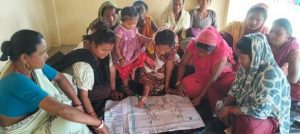
During the first meeting, around 50 men and women participated. The facilitators explained the WAWCAS program in detail. At first, many of us were doubtful. Some feared it might be like microfinance institutions that charge high interest or even exploit people.
However, our trainer patiently explained that this program was different. It was not just about saving money-it was about learning, sharing our problems, and finding solutions together. The program offered opportunities for business development without collateral, along with training and support for both women and children.
With each meeting, our understanding deepened. By the third meeting, those who truly believed in the program came together to form a group. When my name was officially listed, I felt a deep sense of relief and happiness-as if a new door had opened in my life.
After selection, facilitators visited our homes to understand our real conditions. When they came to my house, I openly shared everything: our poverty, my struggles, my husband’s habits, and the responsibilities I carried. For the first time, I felt heard.
As I learned more about the program-its seven-day training, livestock support, business development training, child groups, and collaboration with local organizations-I felt a transformation within me. My thinking began to change. I realized that this opportunity was truly meant for women like me.
One particular meeting became a turning point in my journey. Our Trainer, Chitra, introduced a new and unique activity to help us understand our own economic and social conditions.
Inspired by her words, I finished my household chores early, sent my child to school, and encouraged all the women in my group to arrive at the meeting on time. There was a sense of excitement and curiosity among us.
That day, we learned about economic status ranking, also known as wealth ranking. At first, we did not fully understand the concept, but through discussion and guidance, we gradually learned to categorize households into four groups: ultra-poor, poor, medium-poor, and well-off.
Madam explained the classifications based on the Government of Nepal’s definitions:
- Ultra-poor: Families whose land produces food for only 0–3 months and who depend on daily wage labor.
- Poor: Families with food production for 3–6 months and reliance on labor for the rest of the year.
- Medium-poor: Families with food sufficiency for 6–9 months and additional income sources.’
- Well-off: Families who can sustain themselves throughout the year.
We then placed our names into the category we believed represented our situation. When my turn came, I felt nervous and hesitant. I worried about what others might think. But gathering courage, I placed my name under the “ultra-poor” category.
To my surprise, everyone agreed. It was a difficult moment, but also a powerful one. For the first time, I accepted my reality openly. Instead of feeling ashamed, I felt a strange sense of strength-because acknowledging the truth was the first step toward change.
In the end, 25 women, including myself, were selected for the WAWCAS program.
The session continued with another meaningful activity; creating a social map of our community. With guidance from our facilitator, we worked together to draw a map showing our homes, roads, water sources, schools, and other important places. It was a joyful experience. Seeing our village on paper, and identifying our own homes, made us feel connected and united.
That day’s meeting was not just informative-it was transformative.
Today, I stand with a new sense of awareness and determination. I know that I belong to the ultra-poor category, but I no longer see it as a limitation. Instead, I see it as my starting point.
I now have the courage to dream, the motivation to work hard, and the belief that change is possible.
Being part of the WAWCAS program feels like a blessing. It has given me knowledge, confidence, and hope. For the first time in my life, I truly believe that even someone like me can build a better future-for myself, my daughter, and my family.
From struggle to courage, from silence to voice, and from hopelessness to hope. This is my journey. And it is just the beginning.